At the KAHN CENTER, we often utilize plaque analysis with AI Cleerly Health coronary CT angiograms (CCTA) to fully identify and definte the amount and kind of coronary artery disease is present. This has been a revolution in accuracy and >1,000 patients have been studies, some with repeat studies to evaluate their course over treatment.
All patients with plaque on a Cleerly CCTA are educated on the concept that statin Rx meds may shrink soft plaque (non calcified or NCP) and increase the lower risk calcified plaques (CP).
A
new study demonstrates that this works best when the statin Rx lowers LDL by >30%.
STUDY
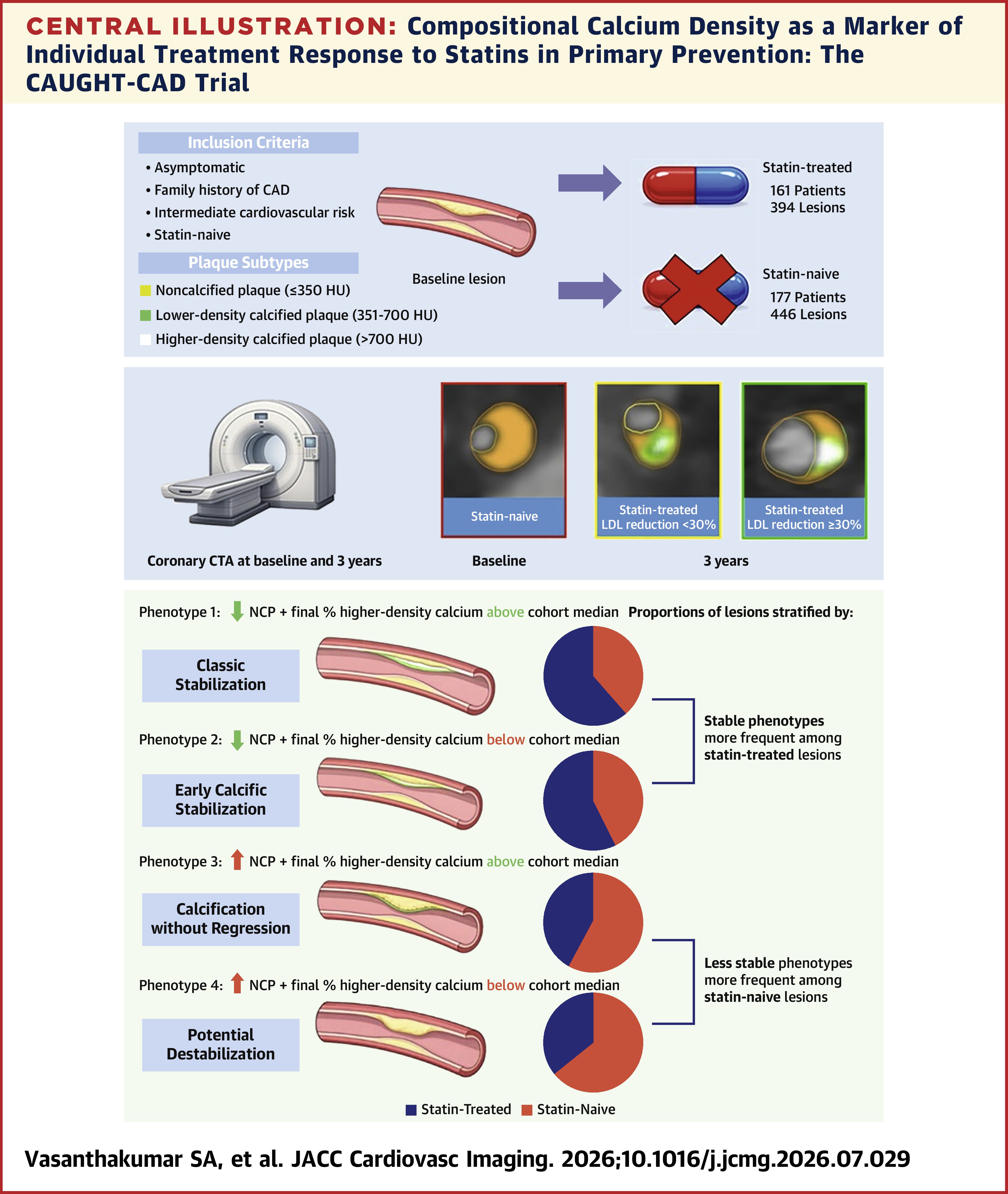
The aim of this study was to examine whether increases in coronary calcified plaque volume and density associated with statin therapy could be used as a marker of plaque stabilization in asymptomatic individuals undergoing serial coronary CCTA.
In the CAUGHT-CAD trial, asymptomatic, statin-naive, intermediate-risk individuals were randomized to a primary prevention strategy (including statin treatment) vs usual care. Participants underwent coronary CTA at baseline and 3 years.
In this post hoc analysis, volumes of 5 plaque subtypes were quantified: noncalcified (≤350 HU), low-density calcium (351-500 HU), intermediate-density calcium (501-700 HU), high-density calcium (701-1000 HU), and very high density calcium (>1,000 HU).
The primary outcome was the per–lesion level change in volumes of calcified plaque subtypes.
RESULTS
Eight hundred forty lesions were included from 338 participants (mean age: 58 years, 57% men, 161 [48%] statin treated).
Statin treatment was associated with greater progression in intermediate-density and high-density calcium, alongside regression of noncalcified plaque, following adjustment for cardiovascular risk factors, low-density lipoprotein cholesterol (LDL-C) level, and baseline plaque volume.
Among statin-treated participants, LDL-C reduction ≥30% was associated with greater progression of high-density and very high density calcium.
CONCLUSIONS
In asymptomatic, intermediate-risk individuals, statin treatment was associated with a shift toward higher density calcium within coronary plaques, most marked with effective lowering of LDL-C.
At the KAHN CENTER, we utilized lower doses of statins along with ezetimibe, anti-platelet agents like aspirin, coQ10, aged garlic extract and intense lifestyle treatments like whole food plant diets and often see significant improvements in follow up Cleerly Health CCTA studies. This new studies
provides support to this approach.